
Shopping for athletic lockers for sale usually starts with a catalog photo and ends with a tape measure and a few surprises. Rooms turn out smaller than the plan suggested, rosters grow, and the bench you wanted blocks the door swing. This guide flips the order. You will work out headcount and wall length first, then choose tiers, ventilation, seating, and a buying route that fits the budget.
Before you look at a single style, write down how many athletes need a space on game day and how many need one all year. Those numbers are often different. A varsity squad may need a locker for every player, while a freshman team that shares a room might get by with fewer openings.
Here is a worked example. A school has 45 varsity athletes and 40 junior varsity athletes. Varsity gets single-tier lockers, junior varsity gets double-tier lockers, and we assume each opening is 12 inches wide.
Few rooms hold 65 feet on one wall, so you would split the run across two or three walls or set up back-to-back rows. Measure the room first, then compare it with the total. If the numbers do not fit, change the tier mix now instead of after the delivery truck arrives.
| Tier | Best fit | Trade off |
|---|---|---|
| Single tier | Varsity players with bulky gear | Uses the most wall per athlete |
| Double tier | Junior varsity, track, soccer | Shorter opening for each athlete |
| Triple tier | Physical education, intramural, visiting teams | Smallest opening, best for light kit |
Taller openings suit athletes who hang jerseys and store helmets or pads. Shorter openings work when the kit is a bag and a pair of shoes. Mixing tiers in one room is normal, and it is the easiest way to stretch a limited budget without shortchanging the athletes who carry the most equipment.
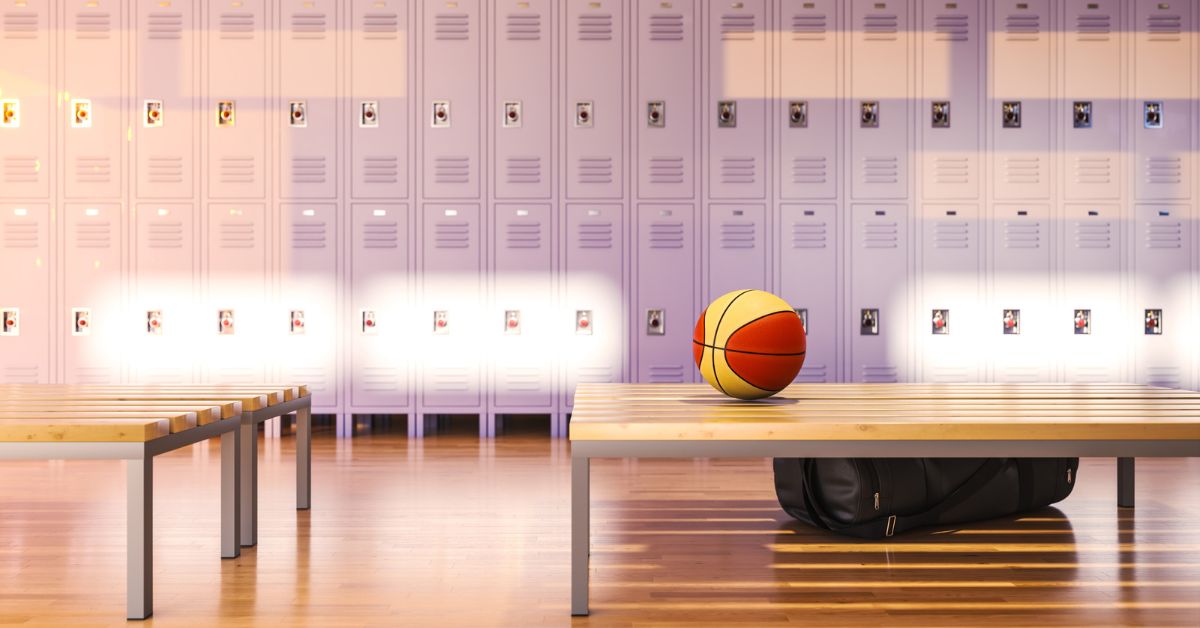
Sweaty gear and closed doors do not mix. Vented or perforated doors let air move through the locker so shoes and pads can dry between sessions. Open front designs go further and suit teams that want gear visible and aired out. Solid doors give more privacy and a cleaner look, which some districts prefer for shared rooms.
Material matters just as much. Steel has long been the default for athletic rooms because it handles abuse, and a baked-on powder coat helps it shrug off scuffs. Plastic resists moisture, which helps near pools and showers. Wood looks great but asks for more care in damp spaces. Ask every supplier which finish and steel gauge they are quoting, and get it written on the quote instead of relying on a brochure photo.
Seating changes the math. If you plan athletic lockers with bench seating, the bench takes floor depth, and your aisle gets narrower. Players need room to sit, bend, and pass each other, especially when two squads share the room. A bench that looks like a small detail in a drawing can turn a comfortable aisle into a bottleneck.
Fixed benches on pedestals stay put and keep the room tidy. Freestanding benches can be moved for cleaning. Wall-mounted benches free the floor underneath, which makes mopping easier. If you want to compare styles side by side, browse the benches and stools available for installation in front of a locker run.
Buying athletic lockers for schools comes with a timing problem that private clubs rarely face. Budgets close on fiscal deadlines, rooms stay busy until the final game, and the only quiet window for installation is often summer. Work backward from the date the room must be ready and leave a cushion for shipping.
Shared rooms add another layer. Physical education classes, varsity teams, and visiting squads may use the same space, so lockers need to survive heavy daily traffic, and you need a clear plan for who holds keys or codes. Decide early whether the room should feel like a school hallway or a team facility, because the answer shapes door style, color, and lock choice.
Hardware takes the most punishment in a team room. Doors get slammed, latches get kicked, and number plates get pulled loose. Decide on a lock approach before you finalize the order, because it changes the door hardware you need. Built-in combination locks mean no padlocks to lose, while padlock hasps keep the door simple and let athletes bring their own. Digital options give a coach or facility manager an override when someone forgets a code.
Think about the finishing pieces too. Bases and end panels cover rough edges and keep dust from collecting underneath. Slope tops stop people from stacking equipment on top and keep the room neat. Number plates, hooks, and coat rods cost little next to the lockers, yet they are what athletes touch every day. Budget for spares so a broken hook does not turn into a broken locker.
Take a tape measure and an honest eye for traffic. A locker door swings about as far as it is wide, so a 12-inch locker needs roughly 12 inches of clear space to open fully. Make sure two athletes can stand at neighboring lockers without bumping each other. Keep doors from swinging into walkways, shower entrances, and exits. Leave a clear path for anyone using a mobility device, and check accessibility requirements with your architect or inspector before the layout is final.
New units give you matching finishes, fresh hardware, and a known condition. Used lockers cost less and can be a smart fit for practice rooms, storage areas, or a program that needs to outfit a second room without a second large budget. The catch is condition. Check doors, hinges, latches, and frames in person, or ask for detailed photos. Refinishing and replacing hardware can close much of the gap. You can see which used lockers are in stock and ask how a refurbished unit would look next to new ones.
Two bids can look close and still cover very different things. Ask every supplier the same questions.
Write the answers down. It keeps every bid on equal footing, so you compare real totals instead of headline prices.
Once you have a headcount, a wall measurement, and a short list of tiers, you are ready for real pricing. Lockers Unlimited is a locker and bench supplier in Charlotte, North Carolina, and the team can turn those numbers into a layout and a price. Send your roster size, room dimensions, and target install date, then request a free quote. Photos of the room help too. They answer questions faster than words do.
1. How many athletic lockers does a team need?
Plan one opening per athlete who keeps gear on site, plus a small buffer for growth. Count varsity, junior varsity, and managers separately so each group gets the right tier.
2. Are vented athletic lockers worth it?
Yes for most teams. Vented or perforated doors let air circulate so damp gear dries between sessions, which helps with odor. Solid doors offer more privacy but trap moisture.
3. Can I buy used athletic lockers?
Yes. Used units work well for practice rooms and overflow space. Inspect doors, hinges, latches, and frames carefully, and ask whether refinishing or new hardware is available before you buy.
4. What is the difference between single and double-tier athletic lockers?
A single-tier locker gives one tall opening per athlete. A double-tier locker stacks two shorter openings in one column. Singles suit bulky gear; doubles save wall space.
5. Can athletic lockers include benches?
Yes. Many locker rooms pair lockers with fixed, freestanding, or wall-mounted benches. Allow extra aisle depth so athletes can sit and pass without crowding the doors