

Walk into almost any warehouse, and the racking you see is probably selective. It is the most common pallet storage system in the world, and the reason is simple: every pallet sits where a forklift can reach it without moving another pallet first. That one promise shapes how the whole building runs.
Selective pallet racking is a single deep system of upright frames and horizontal beams that gives direct aisle access to every pallet position. This guide explains how it works, what it costs you in storage density, how it compares with drive-in, push-back, push back and pallet flow, and which operations it fits best. Lockers Unlimited sells Invincible Rack pallet rack systems with adjustable beams and uprights, which are the building blocks of a selective layout.
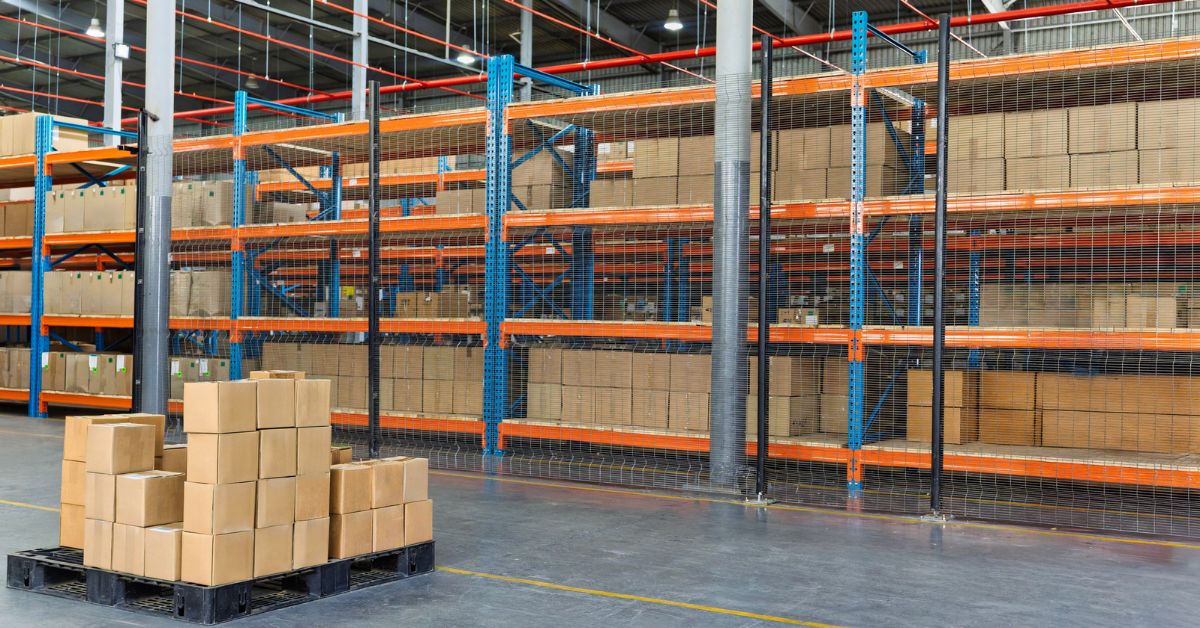
A selective rack is a grid. Upright frames stand in rows, and horizontal beams lock into the frames at set heights. Pallets rest across a pair of beams, one at the front of the pallet and one at the back, and every position faces an aisle.
Four parts do the work. Upright frames are two vertical posts joined by horizontal and diagonal bracing. Beams are the horizontal members that carry the pallets. Base plates spread the load into the floor, where anchors hold each frame down. Safety pins or clips lock each beam into its slot. Many racks also add wire decking across the beams, which gives smaller loads and slip sheets a flat surface.
Single deep means each position holds one pallet from front to back, which is why nothing blocks the next one. Because each position is reached from the front, a forklift never reaches across another pallet to load or unload. Most systems use slotted uprights so beams can move up or down. One published catalog lists beams that adjust in 2-inch steps, and the Invincible Rack line adds locking pins and beam retainers that keep the rack securely in place. That adjustability matters, because pallet heights change as your product mix changes.
Selectivity is how freely you can reach a specific pallet. Selective racking scores a perfect 100 percent because you can store as many different products as you have pallet positions and pull any one of them at any time. You can change the storage mix whenever you like, and you choose the rotation method, whether that is first in, first out or something else.
In daily work, that means fewer moves. Receiving can put away to any open position, and a picker can pull exactly what an order needs. Nobody has to dig through a lane or unload one pallet to reach the one underneath.
The price is floor space. Every row of racking needs an aisle, so selective racking stores fewer pallets per square foot than the dense systems below. Here is a simple example. A common 96-inch beam holds two standard 48 by 40-inch pallets per level. A row of 10 bays with four storage levels holds 10 times 4 times 2, which is 80 pallets, and all 80 can be reached without moving another pallet.
Selective racking sits at one end of a trade-off between access and density. The table shows how the main systems compare. Cost and density vary with layout, so treat it as a guide and not a quote.
Here is what those words mean on the floor. Drive-in racking packs pallets into deep lanes that forklifts enter, which saves aisles but slows access and suits stock that can leave last in, first out. Push back uses nested carts on inclined rails, so the forklift stays in the aisle, and each level can hold a different product. Pallet flow uses gravity to move pallets to the pick face, which gives first-in, first-out rotation and the highest density.
Many facilities mix systems. Selective racking holds fast movers and mixed pallets, while dense lanes hold slow-moving bulk stock. Selective racking also typically costs less per pallet position than the dense systems, because it needs lighter frames and no rails or carts.
Selective racking suits operations that value flexibility over maximum density. It is a strong match when:
It fits less well when you store large lots of a single product that rarely moves. In that case, a dense system can use the same floor space far better, and the extra cost may pay back. Cold storage is a common example, because every cubic foot of refrigerated space is expensive. One supplier’s guide lists retail and third-party logistics as typical fits for selective racking, which makes sense, because products and customers change faster there than a dense lane layout can follow. When you are unsure, selective racking is the safe default, since you can add dense lanes later and still use the same building.
The rack is only part of the system. Plan for these items before you order.
Local rules matter as well. County plan review checklists for steel storage racks ask for load plaque details, anchorage information, and engineered layouts, so check with your building department before you order a tall system.
Installation matters too. Professional installation is available for lockers and related storage, so ask whether it covers your rack project.
A good plan starts with your own numbers. Answer these in order.
Write down these details first. They help determine the right frame depth, beam length, beam levels, and aisle configuration while making storage quotes easier to compare. For guidance on choosing a layout that fits your pallets and building, speak with a storage specialist Monday through Friday, 8 am to 5 pm.
1. What is selective pallet racking?
It is a single deep rack system where every pallet position faces an aisle. A forklift can reach any pallet directly, which maximizes access but uses more floor space.
2. Is selective racking the cheapest pallet rack system?
It typically has the lowest upfront cost per pallet position among common pallet rack types. Total cost still depends on height, capacity, layout, and installation.
3. How does selective racking compare with drive-in racking?
Selective racking reaches every pallet but needs more aisles. Drive-in racking fits more pallets per area, but forklifts enter the lanes and stock leaves last in, first out.
4. How many pallets fit in one selective rack bay?
A common 96-inch beam holds two standard 48 by 40-inch pallets per level, so a bay with four storage levels holds eight pallets, subject to load ratings.
5. Can selective racking be changed later?
Yes. Beams on adjustable systems move in set steps, so levels can change as pallet heights change. Any change needs a fresh check of clearances and the load rating