
Buying second hand lockers can save you a serious chunk of cash, but only if you know what to look for before handing over your money. A locker that looks fine in a photo can hide rust, broken hinges, or a latch that won’t lock no matter how hard you slam the door. Whether you’re outfitting a school, gym, office, or warehouse, the quality of pre-owned storage units varies wildly. The good news? With a clear checklist and a careful eye, you can score durable, secure lockers at a fraction of the cost of new ones.
The first thing to check is the physical condition of the locker frame. Walk around each unit and look at every panel, corner, and seam. Light surface scratches are normal and easy to touch up with paint, but dents in the frame can mean the locker has been dropped, hit, or stored poorly. Pay close attention to the bottom of the locker – that’s where rust likes to start, especially on units that sat in humid basements or gyms. Tap the metal with your knuckles. A solid thunk means the steel is still strong. A hollow rattle or a soft spot under the paint usually means corrosion is eating away from the inside.
Don’t forget the back panel and the top. Sellers sometimes hide damage by lining up the front of the locker neatly and leaving the rough sides facing the wall. If you’re sourcing units in bulk, randomly pull two or three from the middle of the lot and inspect them. This is one of the most reliable methods for identifying durable used lockers worth investing in, and it takes only a few minutes per unit.
A locker is only as useful as its moving parts. Open and close every door at least three times. The door should swing smoothly, sit flush against the frame, and latch without forcing. If you hear grinding, squeaking, or feel resistance, the hinges may be bent or rusted. Hinges can be replaced, but factor that cost into your decision before you buy.
Next, check the locking mechanism. Slide the latch back and forth. It should move with light pressure and snap firmly into place. A sticky latch is a daily headache for anyone using that locker. If the unit takes a padlock, run a test padlock through the loop to make sure the holes line up. For built-in combination locks, ask the seller for the original combinations or plan to rekey them. Misaligned locks are one of the top reasons buyers end up regretting cheap bulk purchases, which is why running through a proper pre-purchase checklist for used lockers saves you so much trouble later.
The paint job tells you more than you’d think. A factory-baked enamel finish on second hand lockers lasts decades. A spray-paint touch-up done last week might peel within months. Run your hand across the surface. It should feel smooth and even, with no bubbling, flaking, or rough patches. Bubbling almost always signals rust hiding underneath.
If the lockers will go in a humid space – locker rooms, pool areas, or industrial wash bays – the finish matters even more. Ask the seller what the original coating was and whether the units were ever refinished. Powder-coated steel handles moisture far better than basic enamel. For vintage or older units, some surface wear actually adds character, but the protective coating still needs to be intact. Decisions like these are easier when you understand the role finishes play in long-term value, especially if you’re purchasing pre-owned lockers for a school, gym, or business.
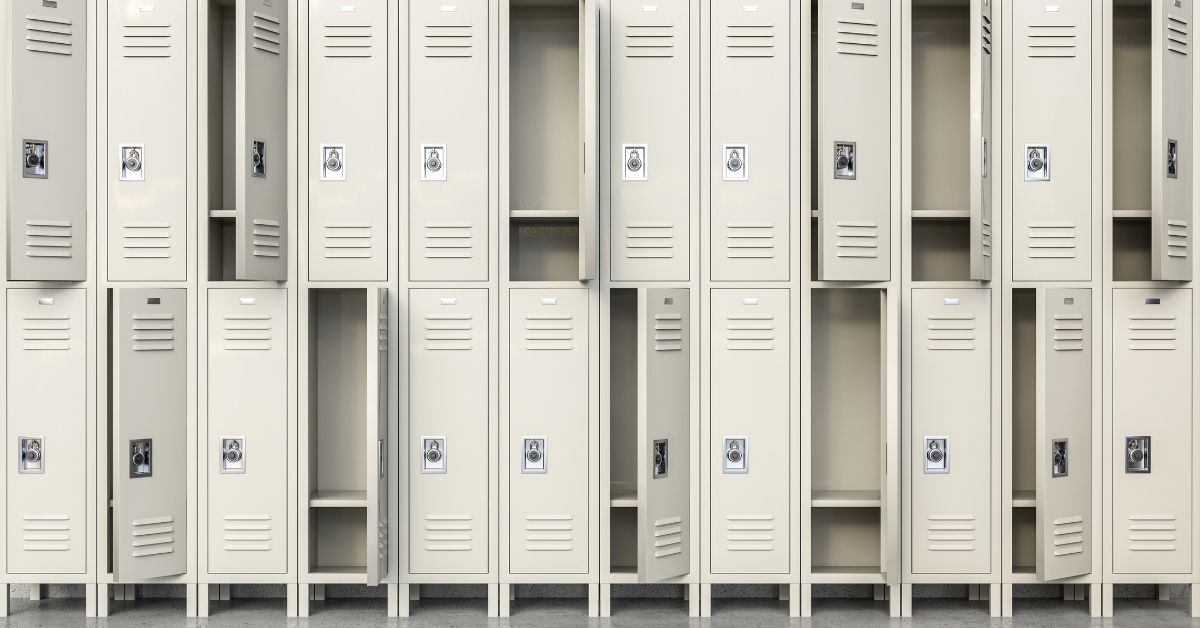
Open the door and look inside. Most quality lockers have ventilation slots or louvers on the door, sides, or top. These prevent moisture buildup and odor, which is especially important for gym and athletic use. If the vents are clogged with dirt or have been painted over, airflow is compromised. That’s a fixable issue but worth negotiating on price.
Inside, check the shelves, coat hooks, and number plates. Bent shelves can be straightened, but missing hardware adds up fast when you’re buying twenty or thirty units. Make a list of every accessory each locker is missing and price out replacements before you commit. Coat hooks, especially, get yanked off over the years. Number plates fall off. Some buyers don’t realize these small parts can run $5–$15 each, and across a full bank of lockers, that math gets ugly quickly.
Where did these lockers come from? A unit pulled from a clean corporate office gym will be in far better shape than one yanked from a high school after twenty years of student use. Ask the seller directly. Most reputable sellers – includingm Lockers Unlimited and other specialists in the space – can tell you exactly where their inventory was sourced from and roughly how old it is. If the seller dodges the question or doesn’t know, that’s a yellow flag.
Older lockers built in the 70s and 80s are often heavier-gauge steel than what’s manufactured today, which is actually a plus for durability. But age also means more wear on hinges, latches, and finishes. Balance the trade-off. Many buyers who walk through a structured evaluation process find it helpful to understand what really matters before buying used lockers for sale, because the seller’s transparency about history tells you almost as much as the locker itself.
Measure your space before you even start shopping. Standard locker widths are usually 9, 12, 15, or 18 inches. Heights range from 36 inches for half-lockers to 72 or 78 inches for full units. If you’re replacing existing lockers, measure the old ones. If you’re building from scratch, measure the wall, the door swing, and any plumbing or vents that might be in the way.
Configuration matters too. Single-tier lockers give the most interior space. Double-tier and six-tier units fit more people in less square footage but offer less storage per person. Think about who’s actually going to use them and what they need to store. A gym member with a duffel bag needs more room than an office worker stashing a coat and a bag of snacks. Choosing the wrong size is the most common regret among facility managers, so taking the time to think through how to pick quality used lockers that fit your facility pays off the moment installation starts.
Once you’ve inspected everything, you have leverage. Missing hooks, sticky latches, surface rust, mismatched finishes – every issue you spotted is a reason to ask for a better price. Sellers expect some haggling on pre-owned inventory. Be polite, be specific, and reference exactly what you saw. A seller who knows you’ve actually inspected the units will respect your offer more than a buyer making vague lowball bids.
Also ask about delivery, installation, and any warranty or return policy. Some sellers offer 30-day returns on bulk orders. Others sell strictly as-is. Get every detail in writing before money changes hands.
Buying used can absolutely deliver excellent value if you slow down and check the details. Trust your hands and eyes more than the listing photos, and you’ll walk away with lockers that serve you for years.
Most buyers save between 40% and 70% compared to retail prices on new units. The exact savings depend on age, condition, brand, and quantity. Bulk purchases usually unlock better per-unit pricing than single-locker buys.
Yes, as long as the locking mechanism is intact and the frame is structurally sound. Many older lockers were built with heavier-gauge steel than newer models, making them surprisingly durable. Always test the latch and consider rekeying or replacing locks for fresh security.
Absolutely. A light sanding, primer, and powder-coat or enamel finish can make older lockers look nearly new. Some buyers refinish them in custom colors to match school or brand identity. Refurbishing usually costs far less than buying new units.
Sticky or misaligned latches top the list, followed by missing accessories like hooks and number plates. Surface rust is also common but usually treatable. Inspect every unit individually rather than trusting a single sample from the lot.
Storage conditions matter more than time alone. Lockers kept in dry, climate-controlled spaces age slowly. Units stored in damp basements or outdoor sheds can develop rust and mold even in a short period. Always ask where the inventory has been kept.
Lockers are heavy and awkward, so professional delivery is usually worth the extra cost. If you handle transport yourself, pad each unit, strap them upright, and avoid stacking them flat. Damaged corners and bent doors are the most common transport injuries.