

Most problems with an ADA locker room bench begin before it ships. A shallow bench gets ordered, the back or wall is forgotten, or the drywall closes before anyone asks what is behind it. All of these are easy to avoid when you know where to look.
Below you will find a table showing which benches we list can serve as the accessible seat, eight mistakes to avoid, and a short list of details to send with your quote request.
Under the 2010 ADA Standards, Section 903.3, an accessible bench seat is at least 42 inches long and 20 to 24 inches deep. This table checks the seat sizes on our product pages against that rule.
| Bench | Listed seat sizes | Can the seat size qualify? |
|---|---|---|
| ADA Locker Room Bench | Lengths of 42, 48, 60 and 72 inches, in 20 or 24 inch depths, plus two 18 inch deep options | Yes at 20 or 24 inch depths. The 18-inch options are marked as likely not compliant. |
| ADA Locker Room Bench with Back Support | Lengths of 42, 48 and 72 inches, in 20 or 24 inch depths | Yes, and a back support is included |
| ADA Wall Mounted Locker Room Bench Kit | Lengths of 42 and 48 inches, in 20 or 24 inch depths | Yes, when fastened to a wall prepared with blocking |
| Free Standing Locker Room Wood Bench Kit | Tops 9.5 or 12 inches wide, in lengths of 24 to 72 inches | No, the seat is too shallow |
| 12 Inch and 9.5 Inch Wide Locker Room Benches | Tops 12 or 9.5 inches wide | No, the seat is too shallow |
A yes in the last column means only that the seat size can meet the rule. It does not make a bench compliant by itself, because the support, height, clear floor space, and strength rules still apply to every row.
Seat size is only one test. The bench also needs back support or a wall, the right seat height, clear floor space, and enough strength, which the mistakes below cover. For the wider picture of ordinary bench sizes, see our locker room bench dimensions guide, and for prices side by side, see our comparison of every ADA-compliant locker room bench we list.
Each mistake below comes from the 2010 ADA Standards or from the specifications on our own product pages, so you can check every claim yourself. If anything here conflicts with your local code, follow the stricter rule and ask your building official.
Counting a shallow bench as the accessible one. The 9.5- and 12-inch-wide benches, and the two 18-inch-deep options on the plain ADA bench, fall under the 20-inch minimum depth. Use them as extra seating, not as the accessible bench.
Forgetting the support rule. Section 903.4 says a bench must provide back support or be affixed to a wall. A bench with neither is ordinary seating.
Assuming the back is automatically right. A back must be at least 42 inches long, start no more than 2 inches above the seat, reach at least 18 inches above it, and sit no more than 2.5 inches from the rear edge of the seat. The back support product page lists a 20-inch back height but not the length or the rear gap, so ask for both if an inspector will measure.
Closing the wall before the blocking goes in. Our wall kit is surface mounted. Its product page says the installer or construction contractor must provide a concealed anchor plate or blocking, as the construction documents or local code require, before the wall is finished.
Assuming anchors are in the box. The back support bench includes bench mounting hardware but not floor anchors, and the plain ADA bench lists pedestals that must be anchored to the floor. Confirm who supplies the anchors for your floor type.
Letting a door swing take the clear floor space. Section 903.2 calls for a 30 by 48 inch clear floor space at the end of the bench seat, and Section 803.3 limits doors that swing into the room. Draw both on the plan before you choose a spot.
Skipping the seat height math. The top of the seat must sit 17 to 19 inches above the finished floor. Our pedestal guide lists pedestals that stand 16 and a quarter inches high, and a 1.25-inch-thick butcher block top on one gives 16.25 plus 1.25, or 17.5 inches. Our ADA benches list a 17.5-inch seat height. Always confirm the pedestal height for your exact bench.
Overlooking wet areas. Section 903.7 says a seat in a wet location must be slip-resistant and must not accumulate water. Ask how the seat surface performs near showers or a pool deck.
A compliant bench sits inside a compliant room. Section 803 also calls for turning space inside the room, and shelves in the room must sit 40 to 48 inches above the floor, with coat hooks inside the reach ranges. Where lockers are provided, at least 5 percent of each type, and no fewer than one, must meet the storage rules. If existing lockers need shelves added, our guide to Penco locker shelves and ADA conversions is the place to start. Treat the bench as one piece of the layout, not an add-on, and sketch the room once with every clearance drawn.
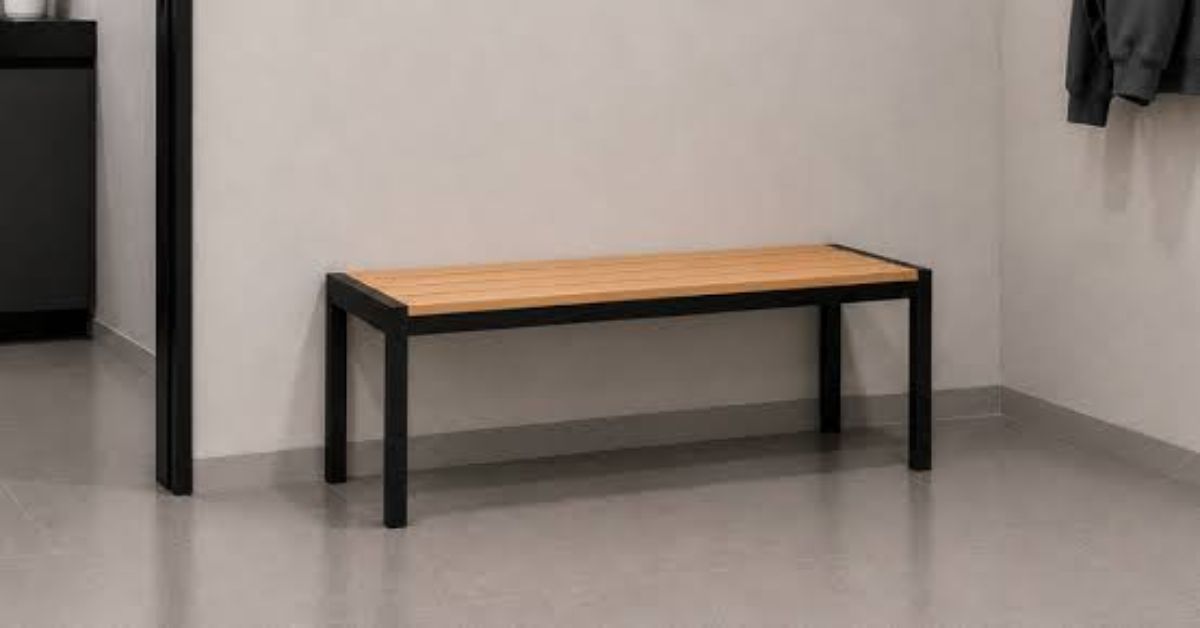
The standard also suggests considering grab bars on a wall next to the bench, never on the seat back, to help people transfer. If you plan them, keep that wall clear when you place the bench.
Here is the 5 percent rule with real numbers. A room with 40 lockers of one type needs at least 5 percent of 40, which is 2 accessible lockers. A room with 10 lockers of one type works out to 0.5, so the minimum of one applies.
Order of work matters as much as the order form. On a new build, this sequence keeps the bench from becoming a rework item:
The last two steps take ten minutes and catch most problems while the installer is still on site. If something is off, a different anchor or a repositioned bench is a small fix on install day and a large one after the room opens.
Lockers Unlimited offers free quotes and installation, and a complete request saves a round of emails. Include these details:
Choosing the right ADA locker room bench starts with checking seat dimensions, support requirements, mounting options, and clear floor space before installation begins. Planning these details early can help prevent costly changes and keep the locker room project on schedule. Review the bench specifications, confirm your layout with the project team, and contact Lockers Unlimited for a quote based on your space and installation requirements.
1. Can a 12-inch-wide bench be my ADA bench?
No. The seat must be 20 to 24 inches deep, so benches 9.5 or 12 inches wide work as extra seating but cannot serve as the accessible bench.
2. Does a wall-mounted ADA bench need a back?
No. The standard allows back support or attachment to a wall, so a wall-mounted bench requires no separate back, though the wall must carry the load.
3. Who provides the blocking for a wall-mounted bench?
Our wall kit page states that the installer or construction contractor must provide a concealed anchor plate or blocking, as required by the construction documents or local code, before the wall is finished.
4. Are floor anchors included with the bench?
It depends on the model. The back support bench includes mounting hardware but not floor anchors, and the plain ADA bench lists pedestals that must be anchored to the floor.
5. Do the lockers in the room also need to be accessible?
Where lockers are provided, at least 5 percent of each type, and no fewer than one, must meet the storage rules, including reach ranges and operable parts.