

Searching for small lockers for sale usually starts with a floor plan, not a catalog. A hallway is too narrow, a gym corridor has a pipe overhead, or an office can only spare a few feet of wall. The real question is how many people you can store in that space without making anyone’s day harder.
This post answers it with arithmetic you can check yourself. You will see what makes a locker small, how 12, 15 and 18 inch widths compare, when a double tier or 6 tier unit pays off, and how to think about price before you ask for a quote.
There is no official cutoff, and manufacturers do not agree on one. In this post, a small locker saves space in one of three ways: a narrow width of 12 to 15 inches, a shallow depth of 12 to 18 inches, or shorter compartments made by stacking tiers in one frame.
A full size single tier locker is usually 72 inches tall and gives each person one tall compartment with room to hang a coat. Small lockers give that up on purpose. They trade hanging space for headcount, which is a good trade when people carry a phone, a wallet and a bag instead of a winter jacket.
Width decides your wall length, so start there.
| Width | Best fit | What usually fits | Watch for |
|---|---|---|---|
| 12 inch | Schools, gyms, offices | Books, folders, a laptop, workout clothes | Full backpacks and bulky coats |
| 15 inch | Mixed use spaces | A daypack, a small jacket, shoes | Takes 25 percent more wall than 12 inch |
| 18 inch | Gear heavy users | Boots, coats, uniforms | Takes 50 percent more wall than 12 inch |
Run the numbers on a 12 foot wall, which is 144 inches. At 12 inches wide you fit 12 columns. At 15 inches you fit 9 columns (144 divided by 15 is 9.6) with 9 inches left over. At 18 inches you fit 8. Moving from 12 to 18 inches costs you four columns of storage.
Depth works the same way. Small lockers commonly come 12 or 18 inches deep. Twelve is enough for books and flat folded clothes. Shoes and a gym bag sit more comfortably at 18.
12 inch wide lockers are the most common narrow option because they fit the most users per foot of wall. Letter paper measures 8.5 by 11 inches, so books and folders lie flat inside. Interior width is smaller than the listed width because of the frame and door, so ask for interior dimensions before you order.
The stress test is the backpack. If most of your students carry full packs, move up to 15 inch. In a gym, 12 inches handles workout clothes and shoes, but not a towel, a coat and a bag together. A narrow bank also pairs well with a 12 inch wide locker room bench with pedestals, which stands 17.5 inches tall overall and suits tight aisles.
6 tier lockers for sale are usually box lockers: six small doors stacked in a frame that is commonly 72 inches tall. Divide 72 by six and each door gets about 12 inches of height before you subtract the frame. Common manufacturer listings show 6 tier units at 12 inches wide and 12 inches deep, so one column stores six people in the footprint of one.
What fits inside is the catch. A phone, wallet, keys, a lunch bag and a small purse fit well. A laptop bag or a coat does not. Match the tier count to the largest thing a user must store, not the average item.
People treat these as rivals, but they describe different things. Small is a size category. Double tier is a layout. Double tier metal lockers split a 72 inch frame into two compartments of about 36 inches each, enough for a folded jacket and a bag but not a long coat. Many double tier units are small lockers, yet plenty of small lockers are single compartments or box styles.
This table compares the layouts on that same 144 inch wall, assuming one person per compartment.
| Layout | Frame | Compartments per column | Users on a 144 inch wall |
|---|---|---|---|
| Single tier, 18 inch wide | 72 inch tall | 1 | 144 / 18 = 8 |
| Single tier, 12 inch wide | 72 inch tall | 1 | 144 / 12 = 12 |
| Double tier, 12 inch wide | 72 inch tall | 2 | 12 x 2 = 24 |
| 6 tier, 12 inch wide | 72 inch tall | 6 | 12 x 6 = 72 |
Against an 18-inch single tier, a 6-tier bank holds nine times as many users on the same wall (72 divided by 8 is 9). Floor space tells the same story. An 18 by 18 inch single tier takes 324 square inches per person. A 12 by 12 inch 6-tier column takes 144 square inches for six people, or 24 each. That is 13.5 times less locker footprint per user. Aisles do not shrink, so your total room savings will be smaller.
Double tier is the middle path: twice the users of a single tier at the same width, with compartments tall enough for real gear. Check reach height too, because the top compartment can be hard for younger students to reach.
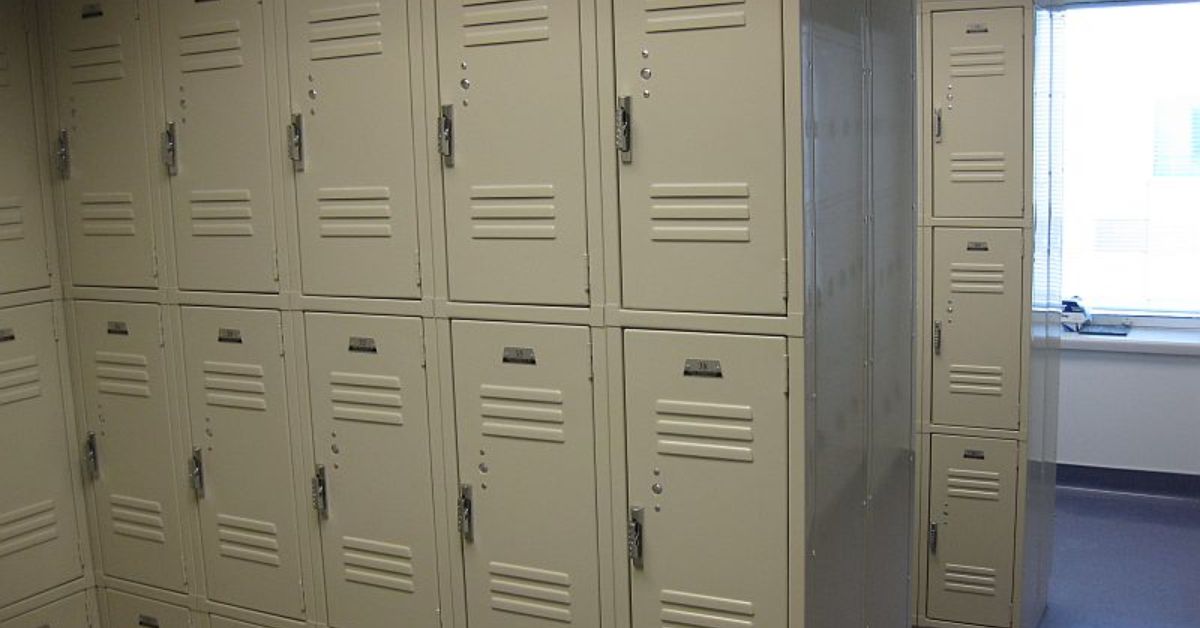
Gyms. Day use members rarely hang anything. They need a safe spot for a phone, keys and a wallet during a class. Box lockers near the entrance or a double tier bank in a narrow corridor serve that crowd. Leave room to open doors and walk, as our locker room dimensions guide explains.
Offices. Hybrid teams share desks, so each person needs a place for a laptop bag, a lunch and personal items rather than a full wardrobe. A row of 12 inch lockers along a hallway does that without a dedicated room.
Schools. Younger students, shared classroom storage and narrow corridors all favor small units. Choose compartment heights students can actually reach. Tall, narrow columns should also be anchored, so ask about installation before you buy.
We do not publish a locker price list, because size, tiers, material, finish and quantity all move the number. Our guide to what lockers cost and why it varies explains each driver. It also gives a rough starting point: basic metal lockers can begin around $100 per unit, with electronic lock models running much higher. Treat that as a floor, not a quote.
For small lockers, compare cost per compartment, not cost per column. Here is a hypothetical to show the method. Suppose a 6 tier column quotes at $300. That is $300 divided by 6, or $50 per compartment. Now add a keyed lock on every door. At the $22 keyed lock price from our cost guide, six doors add $132, so the column becomes $432, or $72 per compartment. Doors multiply lock costs, so a unit with more doors can shrink the savings you expected.
Run the same two steps on every quote you receive: divide by the number of compartments, then add locks. The cheapest column is not always the cheapest compartment.
Bring three numbers: how many people need storage, how many inches of wall you have, and the biggest item each person carries. Lockers Unlimited in Charlotte, North Carolina, can turn those into a width, depth and tier recommendation. Send them through to request your free quote. We can also confirm interior dimensions before you commit to an order.
1. What size is a standard small locker?
No single standard exists. Small lockers usually run 12 to 15 inches wide and 12 to 18 inches deep, while full size single tier lockers stand about 72 inches tall.
2. Are 12 inch wide lockers big enough for school books?
Yes for books and folders, since letter paper is 8.5 by 11 inches. Full backpacks and bulky binders are tight, so choose 15 inch wide lockers for students carrying packs.
3. What are 6 tier lockers used for?
6 tier lockers store small personal items such as phones, wallets, keys and lunch bags. They suit pools, recreation centers, offices and schools needing many compartments in little floor space.
4. How much space do small lockers save vs full size?
A 12 inch wide 6 tier bank holds nine times as many users as 18 inch single tier lockers on one wall, though each compartment is about 12 inches tall.
5. What is the difference between small lockers and double tier lockers?
Small lockers describe a size category, while double tier lockers describe a layout. A double tier splits a 72 inch frame into two compartments of about 36 inches each.