

Buying commercial lockers sounds simple until you’re actually doing it. Suddenly there are dozens of materials, configurations, locking systems, and price points to weigh -and the wrong call can mean lockers that rust out in two years, doors that won’t stay shut, or a layout that doesn’t pass ADA inspection.
Whether you’re outfitting a school hallway, a corporate break room, a gym locker room, or a warehouse facility, this guide covers everything you need to make a smart buying decision on commercial lockers for schools and businesses.
Cheap lockers are an expensive mistake. A set of undersized, thin-gauge steel units in a high-traffic school hallway will be dented, jammed, and rusting within a few years. When that happens, you’re not just paying to replace them -you’re also covering labor, disposal, and the disruption of a second installation.
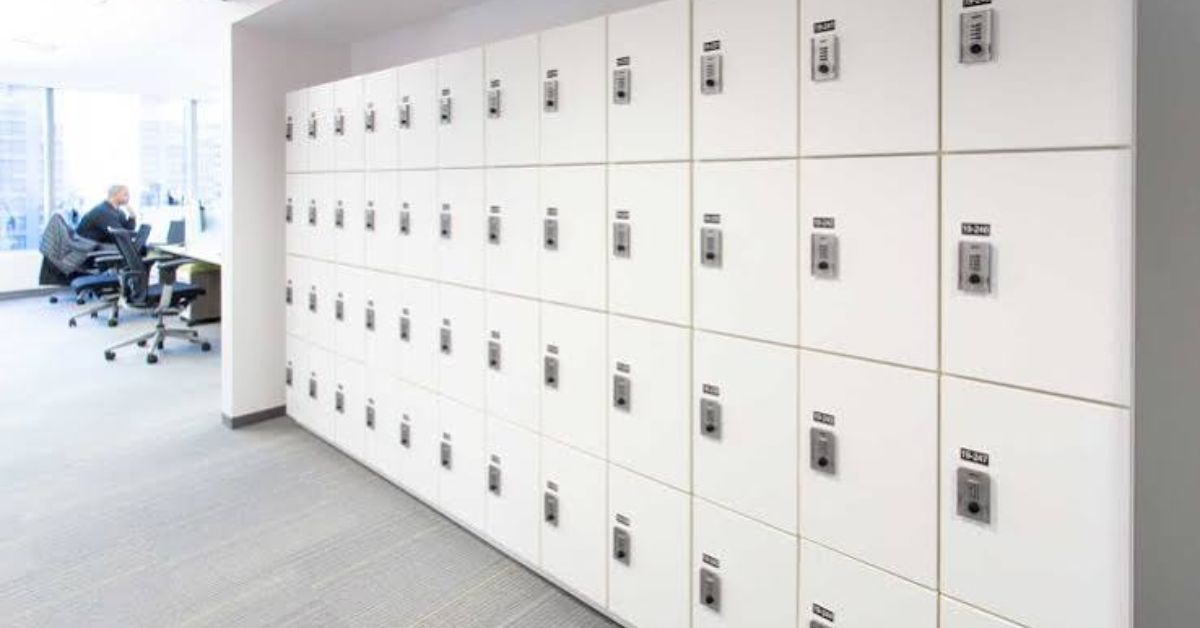
Quality commercial lockers, on the other hand, are built to last 20–30 years with minimal maintenance. They protect users’ belongings, hold up under daily abuse, and reflect positively on your organization. A school with clean, well-maintained lockers signals investment in its students. A gym with solid locker rooms retains members. An office with organized personal storage builds employee morale.
The upfront cost difference between a budget option and a commercial-grade unit is almost always recovered through longevity alone. Factor in reduced maintenance calls and zero premature replacements, and quality pays for itself quickly.
Material selection is the single most important decision you’ll make. Get it wrong and the lockers will fail prematurely regardless of everything else.
The most widely used option across schools, gyms, offices, and industrial facilities. Heavy-gauge cold-rolled steel is durable, affordable, and available in a wide range of configurations. Look for 16-gauge construction for high-traffic environments -thinner gauges dent more easily and won’t hold up under constant use. Powder-coat finishes resist scratching and corrosion in normal indoor conditions.
The right choice for wet or humid environments: pool facilities, spa changing rooms, outdoor installations, and coastal locations. Plastic lockers won’t rust, corrode, or absorb moisture. Phenolic lockers are the premium tier -made from high-density resin panels, they resist bacteria growth, graffiti, and heavy impact. They’re also the cleanest option for healthcare settings.
Used in upscale gym facilities, country clubs, and executive office environments where aesthetics matter as much as function. They provide a warm, premium look but require more maintenance and aren’t suitable for damp conditions.
Not sure which material fits your environment? Comparing the full range of new lockers available across all material types is a good starting point before you commit to a spec.
Configuration affects how many lockers fit your space, how much storage each user gets, and how the finished installation looks. Here’s a quick breakdown of the most common options:
Think carefully about your actual user needs. A school giving students a half-height locker for books and a backpack needs something very different from a gym giving members a place to stow a full gym bag and clothing.
The locking mechanism determines day-to-day user experience and your long-term administrative burden. There are four main categories:
Traditional and low-cost, but lost keys create headaches. Best for permanent assigned lockers in schools or workplaces where each user has one locker.
No lost keys and easy to reset. Built-in combination locks look cleaner than padlocks and are common in school installations. Padlocks offer flexibility since they can be added to any locker hasp.
Keypad codes, RFID cards, and app-based access are increasingly common in corporate and gym environments. They eliminate lost-key issues, support shared-use locker programs, and allow usage tracking. The upfront cost is higher, but the management advantages often justify it.
For gyms specifically, the choice of locking system is closely tied to the overall locker room experience. A full breakdown of what works best for fitness facilities is covered in our guide to gym lockers in Charlotte NC for fitness centers.
Budget is a real constraint for most schools and businesses. Used commercial lockers are worth considering -with a few important caveats.
Well-maintained used lockers sourced from reputable suppliers can save 30–60% compared to new units. They’ve often come out of institutional environments -schools, gyms, government facilities -where they were built to last. The key is condition. Before committing to a used purchase, ask about gauge thickness, lock functionality, and finish condition.
New lockers make sense when you need custom colors, specific configurations not available in used inventory, or a tight delivery window. The best suppliers carry both. You can explore used lockers for sale and current inventory to see what’s available and compare condition grades.
Commercial locker installations in schools, healthcare facilities, and public buildings must comply with ADA requirements. Key points to verify before ordering:
If you’re unsure about compliance requirements for your specific facility type, a supplier with institutional experience will help you navigate this during the layout planning phase -before anything gets ordered.
The supplier you choose has as much impact on your project’s success as the lockers themselves. A few things to evaluate:
Industry experience matters. A supplier who has outfitted schools, gyms, offices, and industrial facilities understands the different requirements of each. They’ll ask the right questions and catch potential issues before they become problems.
Full-service capability is a major advantage. You want a single vendor who handles product selection, layout design, delivery, and professional installation. Juggling multiple contractors for a locker project adds complexity and diffuses accountability.
Itemized quotes are a baseline expectation. Product cost, delivery, labor, hardware, and any removal of existing lockers should all be broken out separately.
Lockers Unlimited has been supplying and installing commercial lockers for schools and businesses since 1992. The team handles everything from initial layout planning to final installation, and their catalog covers metal, plastic, and custom locker solutions for every industry. You can explore their full locker services and project support options or browse lockers by industry to find what fits your facility.
If you’re also managing warehouse or industrial storage alongside lockers, coordinating both through a single provider simplifies the project. Their experience with commercial storage solutions for every industry means you can address the full scope of a facility upgrade in one conversation.
Commercial lockers for schools and businesses aren’t a one-size-fits-all purchase. The right answer depends on your environment, your users, your compliance requirements, and your budget. Work through material selection and configuration before you focus on price -then find a supplier with the experience and inventory to deliver what you actually need. Get those fundamentals right and the lockers will serve you well for decades.
16-gauge cold-rolled steel is the standard recommendation for most school environments. It offers a strong balance of durability and cost. For particularly high-traffic installations -large middle schools, athletic departments -some facilities opt for 14-gauge for added resistance to denting and forced entry.
It depends on hallway width and locker depth. A typical single-row installation of standard 12-inch-deep, double-tier lockers requires about 18 inches of usable wall depth per row including clearance. Always calculate based on actual measured dimensions, not blueprints, and verify that remaining corridor width meets fire egress minimums for your jurisdiction.
Yes, phenolic and high-density plastic lockers typically cost 30–50% more than equivalent steel units. The premium reflects their moisture resistance, durability in wet environments, and longer effective lifespan in those settings. For dry indoor environments, steel usually delivers better value.
Yes. Most steel locker lines are available in a wide range of powder-coat colors, and custom color matching is available on larger orders. This is especially popular with schools that want locker colors to match their brand palette or building interior.
Standard in-stock configurations typically ship within two to four weeks. Custom orders -non-standard colors, sizes, or configurations -generally run four to eight weeks. Build that buffer into your project timeline, especially for school installations timed around the academic calendar.
For small installations of ten units or fewer, experienced facilities staff can often manage the work. For anything larger, professional installation is strongly recommended. Proper anchoring, leveling across a full bank of lockers, ADA bench placement, and finishing hardware all require experience to do correctly. A misaligned or improperly anchored installation creates safety liability and looks unprofessional. Most commercial locker suppliers offer installation as part of their service -it’s worth including in your quote request.