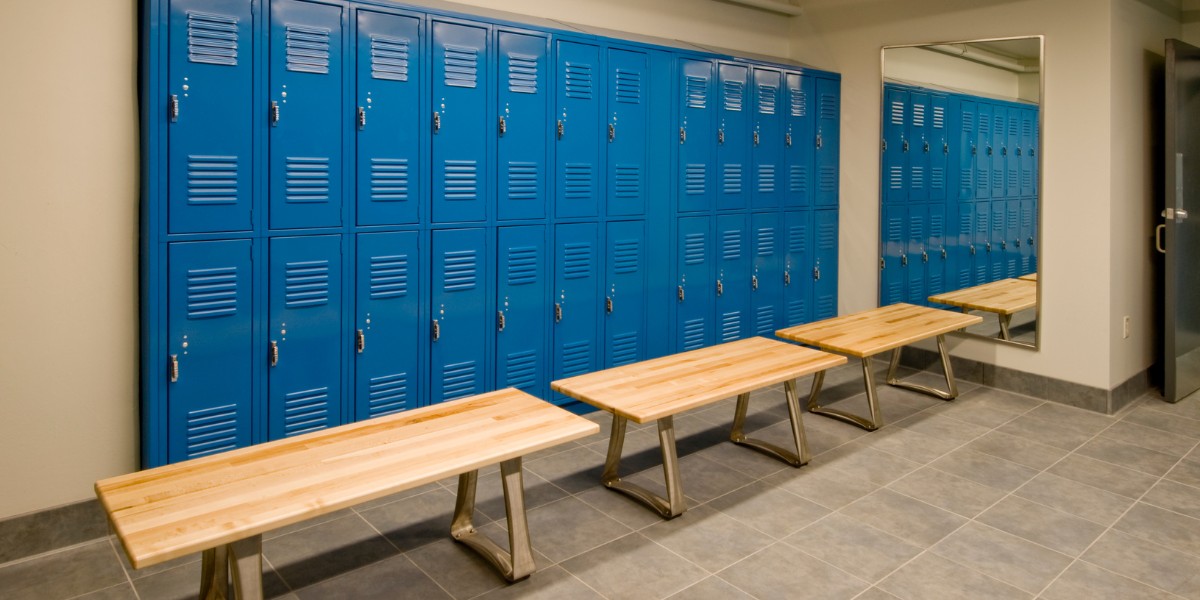
Walk into any well-run gym, school, or sports facility and you’ll notice that the locker room benches get just as much traffic as the lockers themselves. People sit on them while changing shoes, set bags down between sets, and use them as a staging area before heading out to the floor. They’re one of those fixtures that nobody thinks much about – until they’re uncomfortable, unstable, or falling apart. Getting the right bench matters more than most facility managers realize, and understanding what separates a good one from a bad one can save you a lot of headaches down the road.
There’s no single bench that works for every setting, so it’s worth knowing the options before you commit.
Freestanding benches are the most common choice. They sit on their own base, can be repositioned as needed, and work in almost any layout. They’re popular in gyms and schools where the locker configuration might change over time. The tradeoff is that they can shift if someone puts heavy weight on one end, and they take up floor space even when not in use.
Pedestal benches use a single or double-post base mounted to a center support. They look cleaner than freestanding models and are often used in upscale fitness facilities or country clubs. They’re stable but typically more expensive.
Wall-mounted benches attach directly to the wall, which frees up floor space and prevents the bench from being moved or knocked over. They’re a smart pick for tight locker rooms with high foot traffic. The downside is installation cost and the fact that you’re committed to a fixed position.
Locker-mounted benches fold down from the base of a locker bank when needed and retract when not in use. These are common in school settings where space is at a premium and the locker room benches need to serve students efficiently without creating a bottleneck during rushes between classes.
Each type serves a different purpose, so your environment – and how people actually use the space – should drive the decision more than aesthetics alone.
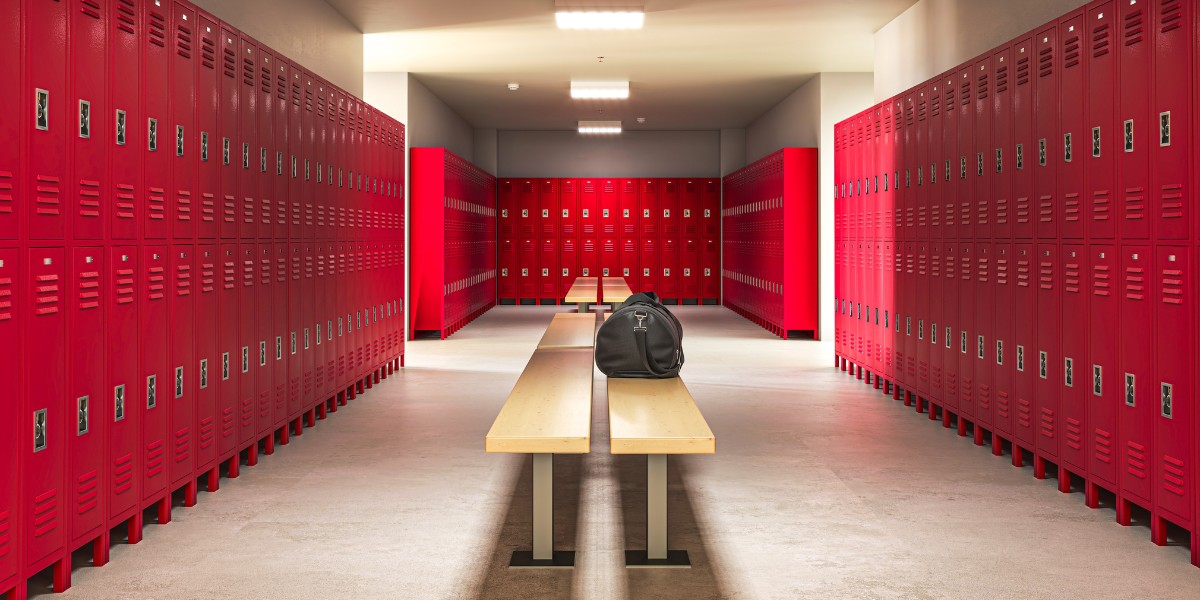
Material choice affects everything from daily comfort to how long the bench lasts in a humid environment. This is where a lot of buyers go wrong by defaulting to whatever looks cheapest on a spec sheet.
Solid wood – typically maple, oak, or teak – has been the traditional choice for higher-end installations. It looks premium, feels warm underfoot, and handles weight well. The problem is moisture. Locker rooms are damp by nature, and untreated wood can warp, crack, or develop mold over time if it isn’t properly sealed. Teak fares better because of its natural oils, but it comes at a cost. If you go with wood, make sure the finish is rated for wet environments and plan for periodic resealing.
Laminate wood gives you a similar look at a lower price point, with better resistance to moisture than raw wood. It’s easy to clean and comes in a range of colors to match locker finishes. The core material matters – high-density fiberboard cores hold up better than particleboard, especially in environments where the bench takes daily pounding.
Steel frames show up frequently in combination benches where a metal base supports a wood or composite seat. Steel adds structural rigidity and longevity, and when powder-coated, it resists rust reasonably well. If you’re putting benches in a pool locker room or anywhere with constant humidity and condensation, make sure the steel is stainless or the powder coat is high-quality, because bare steel will start to rust faster than you’d expect.
Phenolic and composite tops are increasingly popular for high-traffic facilities. They don’t absorb moisture, won’t warp, resist impact, and are essentially maintenance-free from a finishing standpoint. Cleaning is simple. They’re not as warm to the touch as wood, but in a busy gym or school, practicality tends to win out over texture. If you’re also weighing phenolic lockers for the same space, pairing them with matching bench tops creates a cohesive, professional look that holds up over years of use.
Plastic and polymer benches are at the budget end of the spectrum but shouldn’t be dismissed automatically. For changing areas near pools or outdoor facilities where rust and rot are ongoing concerns, a solid polymer bench can outlast both wood and steel. They’re lightweight, easy to move, and some grades are surprisingly durable.
Beyond type and material, a few specific things separate benches worth buying from ones you’ll be replacing in two years.
Weight capacity is the first thing to check. A bench that flexes noticeably when one adult sits on it is going to fail quickly in a high-traffic environment. Look for benches rated at a minimum of 300–400 lbs, and pay attention to how that weight is distributed – center-loaded capacity and end-loaded capacity aren’t the same thing.
Seat width and height affect usability more than people expect. Standard bench height runs between 17 and 19 inches, which works for most adults. Too low and people struggle to stand up; too high and shorter users feel awkward. Width matters for side-by-side use – narrow benches force people to sit closer than they’d prefer, which creates friction in busy rooms.
Surface texture and finish affect both comfort and safety. A completely smooth surface gets slippery when wet, which is a liability issue in any facility. Look for a slight texture or ribbing on the seating surface. It doesn’t need to be rough, just enough grip to prevent someone from sliding.
Stability and base design – check that the base doesn’t rock on uneven floors and that the attachment points are solid. Freestanding benches with wide bases handle this better than narrow-legged designs. If you’re wall-mounting, make sure the hardware is rated for the load and anchors into studs or masonry, not just drywall.
ADA compliance is a legal requirement in many commercial facilities. ADA-compliant locker room benches need to meet specific size and height requirements, include back support or clear floor space underneath, and be positioned to allow access for people using mobility aids. Don’t skip this step – it applies to gyms, schools, and most public-facing facilities.
Fasteners and hardware are easy to overlook. In a humid environment, stainless steel hardware outlasts everything else. Chrome-plated or zinc screws will corrode and either seize up or fail structurally. Stainless costs a bit more but eliminates a maintenance headache.
A bench doesn’t exist in isolation. It sits next to your lockers, under your lighting, and in front of your flooring – so the visual fit matters as much as the functional spec.
If you’ve invested in custom lockers that are built around your facility’s branding or color scheme, a mismatched bench can undercut the whole look. Most reputable suppliers offer benches in finishes that coordinate with standard locker colors. Even if you’re working with standard-issue lockers, choosing a bench material that echoes the locker’s finish – dark laminate with dark locker bodies, for example – creates a cohesive space that reads as intentional rather than assembled from whatever was available.
This matters more than it sounds. Members and students notice when a space looks well-designed, and it affects how they treat the facility. A thoughtfully put-together locker room communicates that the organization takes the space seriously.
Lockers Unlimited can help you match bench specifications to your existing or planned locker setup, which simplifies the ordering process and ensures everything arrives ready to install together.
When you’re ready to furnish or upgrade your locker room, take the time to look at your locker storage solutions as a complete system rather than individual pieces. The right bench, paired with the right lockers and accessories, turns a functional room into a space people actually enjoy using.
Most locker room benches are built between 17 and 19 inches in height, which suits the average adult comfortably. ADA guidelines have more specific requirements for accessible seating that facilities serving the public are required to follow. When in doubt, 18 inches is a safe standard to design around.
A quality bench with a solid wood or composite top and a powder-coated steel frame should last 10–20 years with basic maintenance. Lower-end benches with particleboard cores or untreated wood in humid environments can start showing wear in as little as two to three years. Material choice and installation quality are the biggest factors in longevity.
For locker rooms near pools or areas with constant humidity, composite and phenolic tops outperform wood. They don’t absorb moisture, won’t warp or crack, and require minimal upkeep. Solid wood can work in moderate-humidity environments if it’s properly sealed, but it requires more maintenance to hold up over time.
ADA-compliant benches must be a specific depth and height, provide turning radius clearance, and where back support is provided, meet additional dimensional requirements. They also need to be positioned so a person using a wheelchair can transfer onto them without obstruction. Consulting ADA guidelines or a certified accessibility specialist before purchasing is the safest approach for commercial facilities.
Yes, and wall-mounted benches are a popular choice for facilities that want to maximize floor space or prevent benches from being moved. They require proper anchoring into wall studs or masonry and should be rated for the expected load. Professional installation is recommended to ensure safety and compliance.
Daily wiping with a mild disinfectant is sufficient for most bench surfaces. Avoid bleach-based cleaners on wood finishes, as they can dry out and crack the sealant over time. Composite and phenolic tops handle stronger cleaning agents well. Check fasteners and hardware annually for corrosion or loosening, and reseal wood surfaces every one to two years depending on traffic levels.