
A pool area rarely fails all at once. A hinge pin goes first, then a latch, then paint starts to blister near the floor, and a few years in, the whole bank looks tired. Corrosion-resistant lockers are the answer, but only when the specification is written for the room instead of copied from a dry locker room.
This guide is for facility managers, architects, and owners who have to write that spec for natatorium lockers or spa room lockers. It shows how to split a pool area into zones, what to ask about hardware, ventilation, and mounting, and it ends with a checklist for your bid package. It does not rank materials. If you only need a material recommendation, the existing posts on plastic gym lockers in wet environments and phenolic lockers for wet areas cover that ground.
A pool deck, a shower row, a dry changing area and a spa lounge sit under one roof, yet they treat lockers very differently. Splitting the room into four zones before you pick a product keeps the spec honest.
Draw the zones on the real floor plan, then walk the room and note where water actually ends up. Shower spray, deck splash and the mop routine rarely match the drawings.
The air matters as much as the water. A Nickel Institute guide to pool buildings says chloramines, the compounds that form when chlorine reacts with sweat and other organic matter, are thought to be the most important environmental factor in the corrosion of stainless steel. The same guide advises keeping pool hall humidity between about 50 and 70 percent. Ask the mechanical engineer what your building actually holds, because it changes what a locker will face.
Once the zones are drawn, assign a material to each. The table maps the new locker lines to each zone. For the full tradeoffs, see the post on plastic lockers for humidity.
Here is how that plays out. Say a room holds 120 lockers, and 36 of them sit in the deck and shower zones, which is 30 percent. The other 84 sit in dry changing, and 36 plus 84 equals 120. Only the 36 need wet zone materials, so a zone-based spec can focus its tightest requirements on 36 lockers instead of all 120.
Keep the dry zone honest too. Steel in a dry changing area is common and often sensible, but read the finish exposure language in the warranty first. A room that looks dry on the plan can still sit in humid air carrying pool chemicals.
Lockers rarely fail at the box. They fail at the small parts. Put these questions in front of every bidder:
Ask for a sample set of hardware and look at it before you approve anything. A hinge and a latch on your desk tell you more than a data sheet. Ask about padlock staples and shackles too, since they sit in the splash path.
Some pool design guides call for 316 grade stainless steel over 304 for exposed hardware. Treat that as a conversation starter with the supplier, not a rule, since the right answer depends on the part and the exposure.
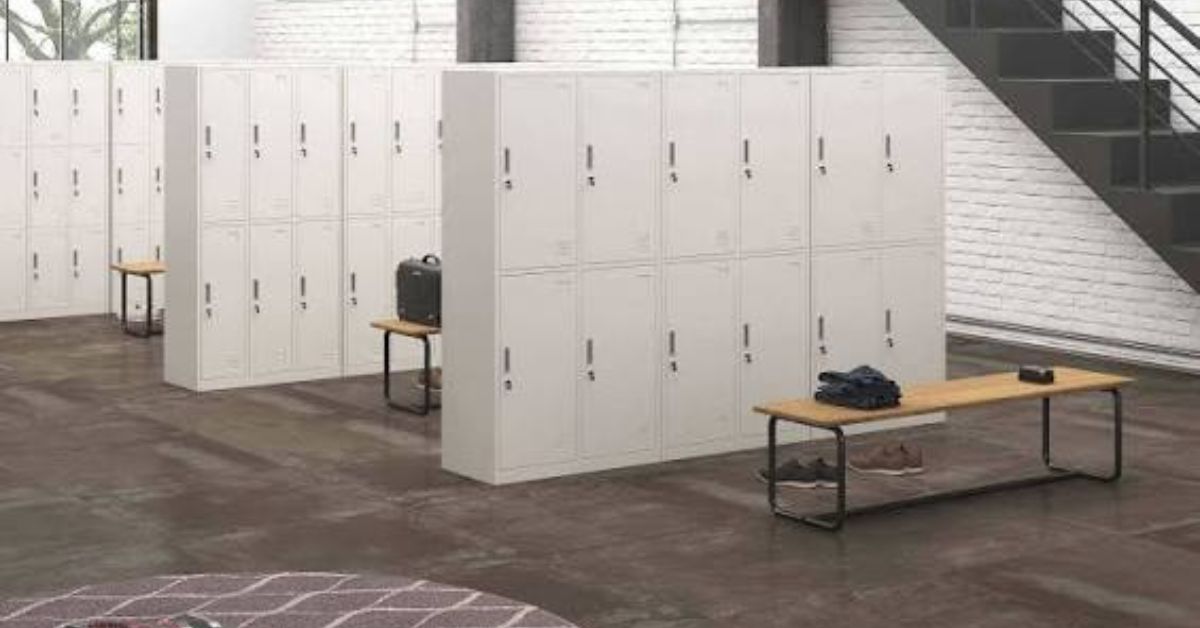
A locker that sheds water and dries out will outlast one that holds it. Ask how each unit handles both.
Pool halls often run humid all year, so airflow matters even in the dry changing area. If lockers sit tight against an exterior wall, moisture can settle behind them where nobody looks.
Finally, walk the room with the cleaning crew. Chemicals, mops, and hose downs shape the exposure as much as the pool itself.
Manufacturers recommend anchoring lockers once they are level, and Penco states that lockers should be anchored to the wall, the floor, or both depending on conditions. In a wet room, that raises a practical question: what is the floor made of, and what sits under it?
Coordinate with the flooring contractor before anchors go through tile or a waterproof membrane, so the penetration is sealed properly, and write down who handles it. A professional installation team can assess the site before delivery, which is where problems like uneven floors and hidden obstacles tend to show up.
Ask for an installation sequence that finishes wet work first. If tile and sealants cure before lockers arrive, anchors go into finished surfaces instead of fresh ones. Confirm the order with the general contractor.
Benches belong in the same conversation. They share the floor, and their materials face the same exposure. The guide to choosing locker room benches covers the options.
Copy this table into your bid documents and ask each bidder to answer every line.
Ask bidders to return the table filled in, with data sheets attached. A bidder who skips lines has told you something useful before you read a price.
Lockers Unlimited offers free layout planning for new projects. A floor plan or photos of the room are enough to start. Contact the team for zone-by-zone locker recommendations tailored to your space and storage requirements.
1. What makes a locker corrosion-resistant?
It uses materials that do not rust, such as polyethylene or phenolic panels, or finishes and hardware chosen for chloramine exposure. Ask for the material and hardware specifications in writing.
2. Which locker material works best on a pool deck?
Plastic and phenolic are the usual choices for wet zones. Plastic is waterproof and rust-resistant, while phenolic resists moisture, mold, and mildew. Confirm ratings against each product data sheet.
3. Are phenolic lockers suitable for natatoriums?
Phenolic panels resist moisture, bacteria, mold, and mildew, so they suit wet areas. Natatorium air also carries chloramines, so confirm hardware materials and warranty exposure limits before ordering.
4. Can steel lockers be used near a pool?
Sometimes, in drier zones with ventilated doors. Some manufacturer warranties limit coverage when a finish meets high humidity or pool chemicals, so read the exposure language before ordering.
5. How do I specify lockers for a spa locker room?
Map each zone, then name the material, hardware, ventilation, and mounting for it. Laminate and executive lines are listed for spas, but confirm moisture ratings for steam or sauna areas.