

Most people browsing lockers for sale compare three things: price, color, and the size on the spec sheet. Weight seldom makes the list. Then a truck pulls up, and someone asks where all that steel is supposed to go. Steel lockers are dense, tall, and awkward to move, and a bulk purchase turns those traits into a logistics project. This guide covers the physical side of buying: footprint, floor loading, doorways, and delivery day. It uses a real overstock lot as the example, so the arithmetic comes from posted specs instead of guesses.
Our current overstock includes brand new Patriot Duty Gear Lockers. They are all welded, heavy-duty units made for law enforcement, security, and military settings. The listing gives the size as 24 inches wide, 24 or 36 inches deep, and 78 inches tall, at roughly 250 pounds each. Forty units are available, and pricing is by request. That makes a handy lot for testing the method, because the same steps work for any steel locker you are weighing.
| What we measure | 24 inch depth | 36 inch depth |
|---|---|---|
| Floor area per unit | 4 square feet | 6 square feet |
| Floor area for 40 units | 160 square feet | 240 square feet |
| Listed weight per unit | About 250 pounds | About 250 pounds |
| Weight of 40 units | 10,000 pounds | 10,000 pounds |
| Weight per square foot of footprint | 62.5 pounds | About 41.7 pounds |
The math is simple. A 24 by 24 inch footprint is 576 square inches, or 4 square feet. A 24 by 36 inch footprint is 864 square inches, or 6 square feet. Weight per square foot is the 250-pound figure divided by that area. Treat 250 pounds as approximate, and confirm the weight of the exact depth you plan to order.
Forty units at 250 pounds each add up to 10,000 pounds, which is five tons of steel. Few buyers picture that number, yet it drives every decision that follows. Delivery needs the right equipment. Staging needs a clear, dry spot. The final location needs a floor that can carry the load.
Spread across 160 square feet, the lockers alone press down about 62.5 pounds on each square foot of footprint. At 240 square feet, that drops to about 41.7. Those figures leave out everything people will store inside, so real loading runs higher. A ground floor slab rarely raises concern. An upper floor, a mezzanine, or an older building deserves a conversation with a qualified professional before you commit.
Quantity scales these numbers in a straight line, which makes early estimates easy. Here is the same lot at three sizes, using the 24-inch depth.
| Units | Weight | Floor area |
|---|---|---|
| 10 units | 2,500 pounds | 40 square feet |
| 20 units | 5,000 pounds | 80 square feet |
| 40 units | 10,000 pounds | 160 square feet |
A unit that stands 78 inches tall has very little margin under a typical doorway, and many standard doors are about 80 inches high. That leaves two inches to spare, and a threshold, a door closer, or a low-hanging light can eat it quickly. All welded construction makes the problem harder, because these lockers arrive built. They cannot be flattened or broken down the way flat-packed units can.
Walk the delivery path before the truck does. Measure each door opening, each hallway turn, and each stair or ramp between the curb and the install spot. Note the elevator size if the room is upstairs. Then write the narrowest point on your order notes, so the people moving the lockers know exactly what they are up against.
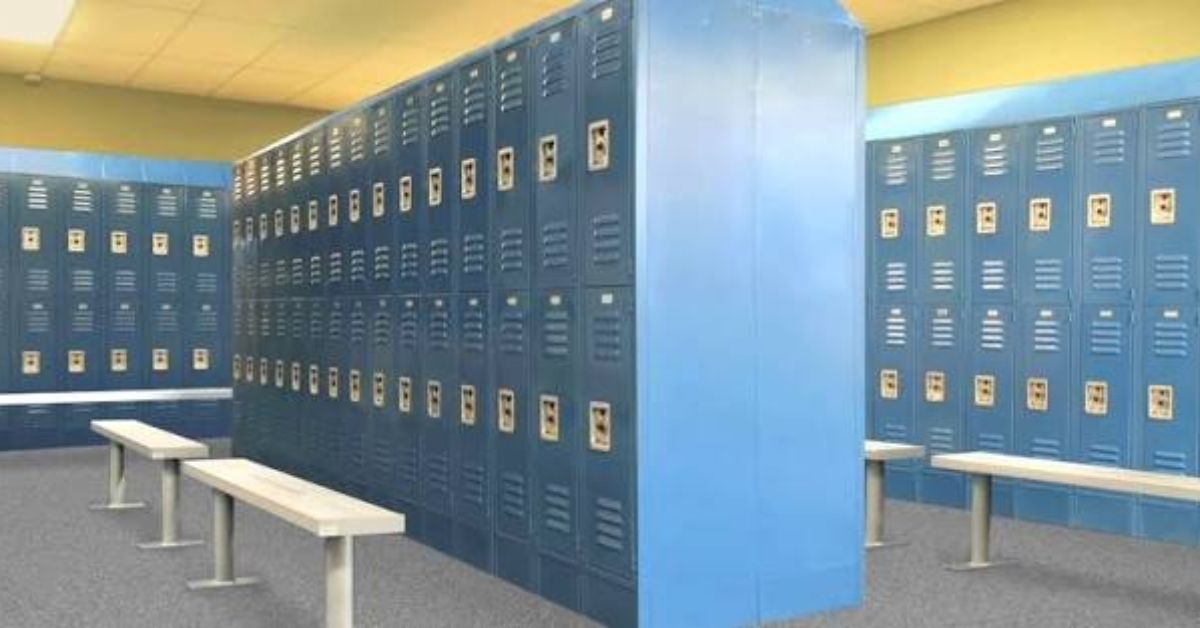
Say the lot arrives in two deliveries of 20 units. Each delivery weighs 5,000 pounds, since 20 times 250 is 5,000. Staging 20 units at 24 by 24 inches takes 80 square feet, and at 24 by 36 inches it takes 120. Add walking room around each unit, and the clear area you need is noticeably larger than those figures.
Pick a dry spot close to the install location and away from doors people use. Confirm in advance who is unloading, what equipment they bring, and whether someone must sign for the freight. If the lot arrives in two deliveries, each visit needs its own clear path. Tall steel units can tip, so keep them upright and anchor them as soon as they are placed.
A 78-inch steel locker gets top-heavy once people start loading the shelves, so anchoring is part of the job, not an afterthought. Depending on the room, units can usually be fastened to the wall, the floor, or each other in a bank. Ask who handles that work and which fasteners suit your wall type, because block, drywall, and concrete each call for different hardware. Skip anchoring, and you accept a tipping risk every time a door swings open under a heavy load.
Plan the order of work too. Anchor one run, check it for level, and only then move to the next. Working in sequence catches a crooked floor early, while it is still cheap to shim.
Overstock does not mean worn. The Patriot lot is listed as brand new, which is the point of a clearance: the product is fresh, and the demand moved on. Used stock is a different story. If your budget points toward used lockers, ask for current photos of the doors, hinges, latches, and base. Look for rust along the bottom edge, where moisture collects.
Condition also affects the schedule. A unit that arrives with a bent door or a seized latch costs time even when the price was low. Build a short inspection step into delivery day, and agree beforehand how problems get reported.
Forty lockers is a different purchase from four. Placed side by side at 24 inches each, they make a run of 960 inches, or 80 feet. Few rooms offer that much uninterrupted wall, so you would likely split them into four runs of ten, each 20 feet long, or set them back to back in the middle of the room. Either layout changes how many people can reach a locker at once.
Orders at this scale also raise pricing questions, such as quantity breaks and grouped delivery. Our guide to lockers wholesale covers what bulk buyers should expect and what to prepare. Read it alongside this one, because weight and quantity push the budget in the same direction.
Put these in an email before you pay a deposit. The answers are quick to give and expensive to learn later.
Take your room size, door measurements, and floor type to a supplier who can read them. At Lockers Unlimited, our free quote request includes layout planning, where the team assesses your space and suggests a configuration that works for access and function. Send your quantity, your narrowest doorway, and photos of the install area to request a free quote. Ask the quote to list weight, depth, and condition for every unit, so nothing important lives only in a phone call. The sooner those numbers are on the table, the fewer surprises you will meet on delivery day.
1. How much does a heavy-duty steel locker weigh?
Our listed Patriot Duty Gear Lockers weigh roughly 250 pounds each. Other models vary with size and steel gauge, so ask for the exact weight before planning floors or doorways.
2. How much floor space do 40 lockers need?
Forty lockers at 24 by 24 inches cover 160 square feet, or 240 square feet at 24 by 36 inches. Leave working space in front so doors open fully.
3. Does overstock mean the lockers are used?
Not necessarily. The Patriot overstock lot is listed as brand new. Still, confirm condition in writing, because overstock explains why units are discounted, not whether anyone has used them.
4. What should I measure before ordering lockers?
Measure the install wall, ceiling height, every doorway and turn on the delivery path, and the floor type. Note the narrowest point so the crew knows what must fit.
5. How do I get pricing on the overstock lockers?
Pricing is by request. Send your quantity, delivery address, and room measurements through the contact page, and ask for a free quote so the price covers everything the project needs