

Walk into any gym at 6 p.m. on a Monday and you’ll see the same bottleneck: a crowd of people hovering near a bank of lockers, trying to find an open one, dodging gym bags left in the aisle. Good locker rooms don’t happen by accident. Whether you’re building a new fitness center or renovating an aging facility, the way you lay out and equip your locker rooms directly affects member satisfaction, safety, and how long people actually stick around after their workout. Getting the details right takes more planning than most people expect.
Before picking a single locker model, map out how people will actually move through the space. Peak-hour congestion is almost always a layout problem, not a size problem. A locker room that’s technically large enough can still feel cramped if the aisles are too narrow or the benches sit too close to locker doors that swing open.
A good rule of thumb: leave at least 42 to 48 inches of clearance in front of locker banks so two people can pass each other while a third has a door open. Group lockers in clusters rather than one continuous wall, and give each cluster its own bench so people aren’t crossing the whole room to sit down. If your facility serves a high volume of members during specific windows – mornings before work, evenings after – consider adding a secondary bank of day-use lockers near the entrance so people who just need to stash a phone and keys don’t compete for space with members storing a full gym bag.
Lighting matters here too. Dim corners near locker rows create blind spots that make people uneasy, especially in shared facilities. Bright, even lighting throughout the row – not just at the entrance – goes a long way toward making the space feel safe and easy to navigate.
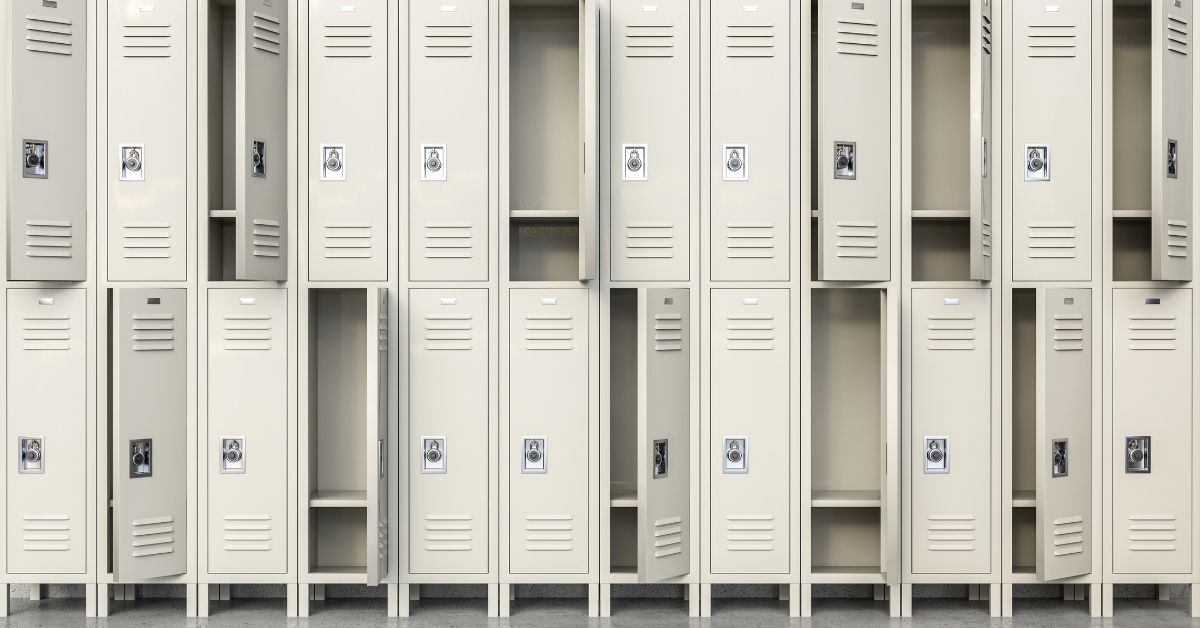
Gym locker rooms take a beating. Between sweat, shower runoff, and constant door slamming, the materials you choose need to hold up far longer than office or school storage would. Plastic lockers are a common pick for pool areas and humid zones since they resist moisture, don’t rust, and clean up easily after graffiti or scuffing. Metal lockers remain the workhorse for general-purpose gym storage thanks to their durability and lower upfront cost, though they need a powder-coated finish rated for moisture exposure if they’re anywhere near a shower or sauna.
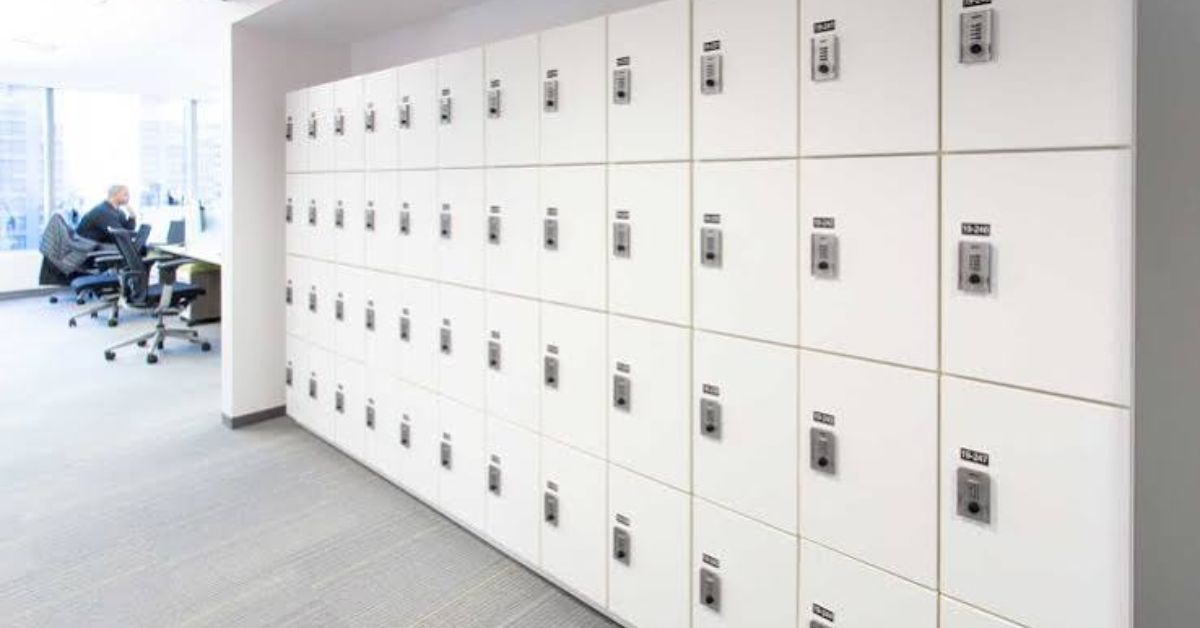
For upscale facilities – think boutique studios, corporate wellness centers, or country clubs – laminate and executive-style lockers offer a more polished look without sacrificing function. If you’re weighing options across metal, plastic, and stadium-style lockers, it helps to think about the specific zone first: pool deck, dry changing area, or team room all call for different specs. Stadium lockers, for instance, are built for quick access to gear and uniforms, which makes them a natural fit for athletic facilities with team-based use.
This is the part facility managers tend to underestimate: locker accessories quietly determine whether a locker room feels functional or frustrating. A locker with no shelf forces someone to pile a phone, wallet, and keys on top of shoes. A bank of lockers with no sloped tops collects dust and becomes an informal (and messy) storage shelf. Small additions solve real problems – hooks for towels and jackets, adjustable shelving to separate wet and dry items, and raised or ventilated bases that keep moisture from pooling underneath.
Sloped tops are worth calling out specifically, since they discourage people from stacking bags and bins on top of locker rows, which both looks bad and creates a safety hazard if something falls. If you’re outfitting or retrofitting a facility, it’s worth reviewing a full range of locker accessories before finalizing your order rather than adding pieces later, since matching finishes and mounting hardware gets harder once the original lockers are already installed.
Locks deserve their own line item in the budget. Combination locks are cheaper but slower during rush hours; electronic or RFID locks speed up turnover but cost more upfront and need occasional battery maintenance. Match the lock style to how busy your peak hours actually get.
ADA compliance isn’t just a legal checkbox – it shapes how welcoming your locker room actually feels. That means wider aisles at accessible locker banks, lower mounting heights for at least a portion of your units, and seating that supports people who need it. An ADA-compliant bench with back support near accessible lockers isn’t a luxury add-on; it’s part of a functional design that serves your whole membership base, not just the majority.
Beyond compliance, small comfort details add up. Non-slip flooring near shower entrances, hooks placed at a height that works for most adults, and enough bench length that someone can sit and change without their neighbor’s bag in their lap. None of these are expensive fixes, but they’re the kind of thing members notice – usually only when they’re missing. Lockers Unlimited works with facilities across schools, gyms, and corporate wellness centers to match these design details to the realities of daily use, since a layout that looks good on paper doesn’t always hold up once real people and real gym bags are in the mix.

A locker room that looks great at grand opening but falls apart in eighteen months isn’t a good investment. Ask about warranty terms, replacement part availability, and whether the manufacturer stocks parts for your specific model years down the line. Powder-coated finishes should be rated for the humidity level in your space, and hinges and latches should be commercial-grade rather than consumer hardware that wears out under constant use.
If you’re renovating rather than building new, get a professional layout and installation assessment before committing to a plan. An experienced team can often spot issues – like inadequate ventilation behind a locker bank or a bench placement that will block a fire exit – that aren’t obvious from a floor plan alone. It’s also worth planning your demolition and installation timeline around your facility’s slower season if possible, since locker room downtime during peak months creates real friction for members.
Budget a little extra for accessories and hardware upgrades down the line, too. Facilities that skip this step often end up patching problems reactively – replacing a broken hook here, adding a missing shelf there – instead of solving the underlying design gap once.
A well-planned locker room pays for itself in fewer complaints, smoother peak-hour flow, and members who actually enjoy using the space instead of rushing through it. Start with how people move, choose materials suited to the environment, and don’t treat accessories as an afterthought. The details are what people remember.